Eclipse
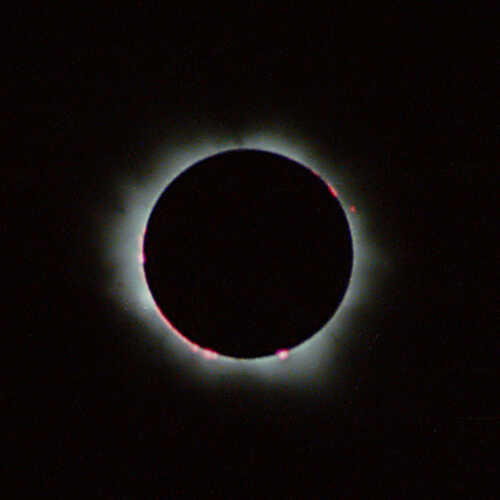
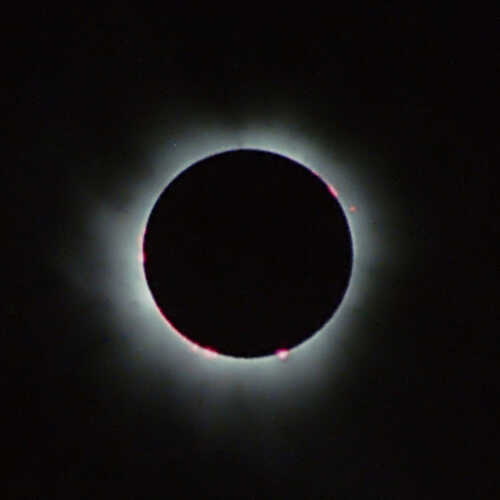
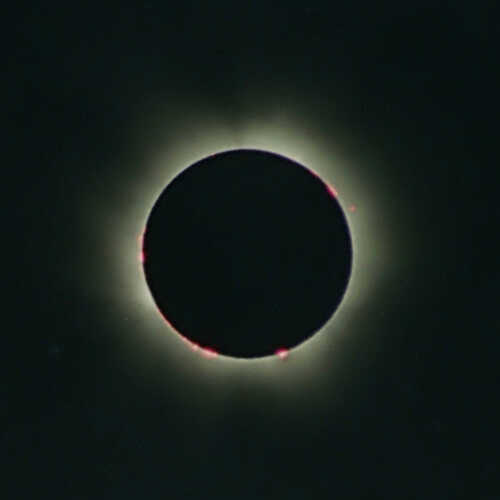
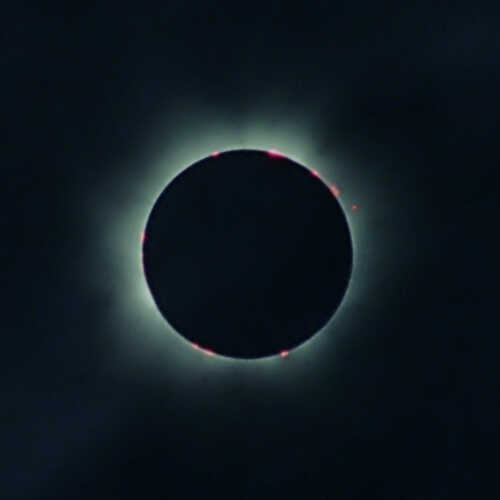
Pictures of the 1999 Total Solar Eclipse
Location
These pictures were taken from a field in Northern France, near
Follemprise just to the North East of Rouen. Latitude 49° 45' North, Longitude 1° 18' East,
pretty much on the centre line of totality. You can get a map of our location by going to
a map of our location. The field we were in is at the junction of the D298 and D12.
We managed to get a pretty clear view of totality, with only some thin
cloud encroaching from the West (i.e. from the Right as we viewed the sun).
We abandoned our original viewing site because of the approaching clouds, and did a mad
high-speed dash through the French countryside trying to get under the
clear patch. We got the kit set up again with about five minutes to spare!
Equipment etc.
The main camera was a Minolta Dynax 7000i with a Sigma 70-210mm
lens set to maximum zoom and a Tamron 1.4 times teleconverter.
The approximate overall focal length works out at about 300mm.
All this was, of course, mounted on a tripod.
The aperture of the Sigma lens was set at F8 for most of the shots,
which equates overall to F11 with the teleconverter in place.
The exposure changed by varying the shutter speed across a wide range.
The film was Kodak "Royal Gold" 100ASA, and the processing was a standard 1 hour service
at the chemists. In 2015, I had all the negatives re-scanned using modern equipment and
the images here have been updated to use the results of this. Some further digital
processing has been done to reduce noise and make minor adjustments to brightness
and contrast for the final images. All the images have been cropped to show only
the interesting central area.
To see the main images, click on thumbnail pictures in the sections below.
Before Totality
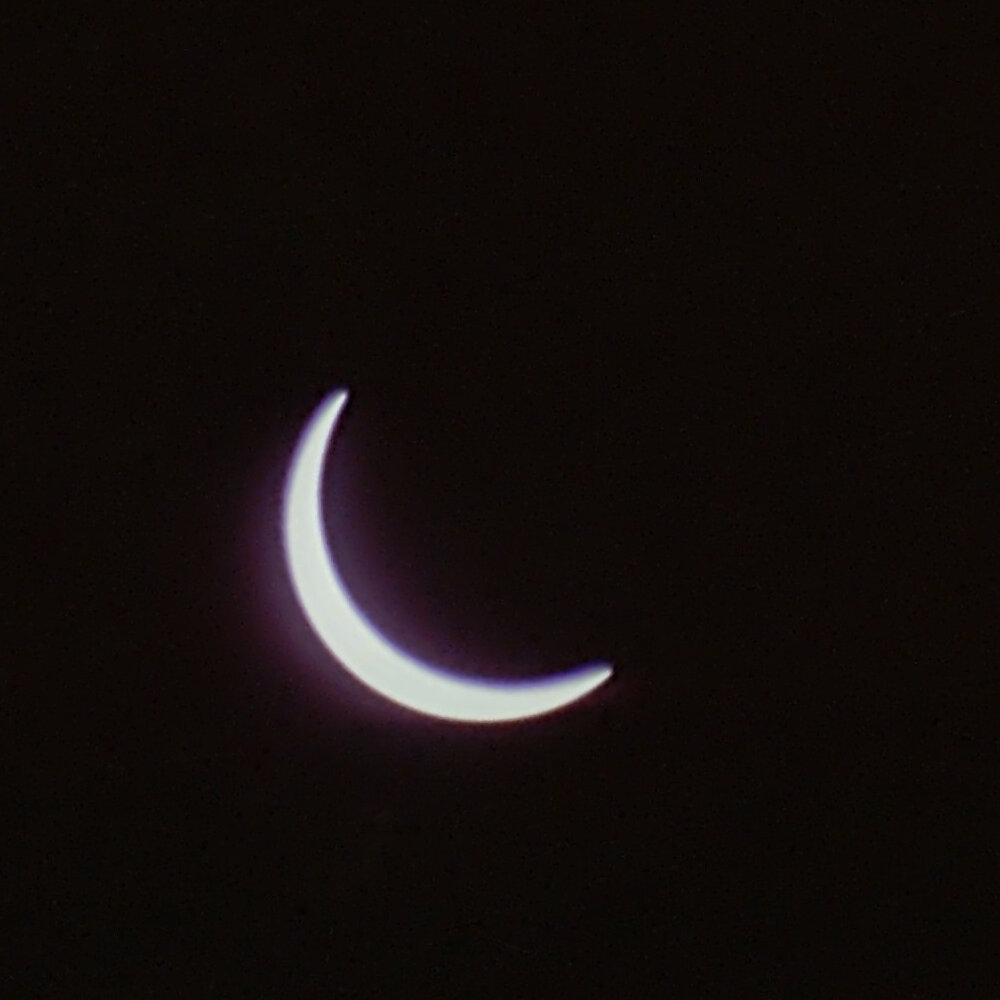
The first image was taken through Solar Filter Film using automatic exposure,
and I haven't a clue what the camera selected:

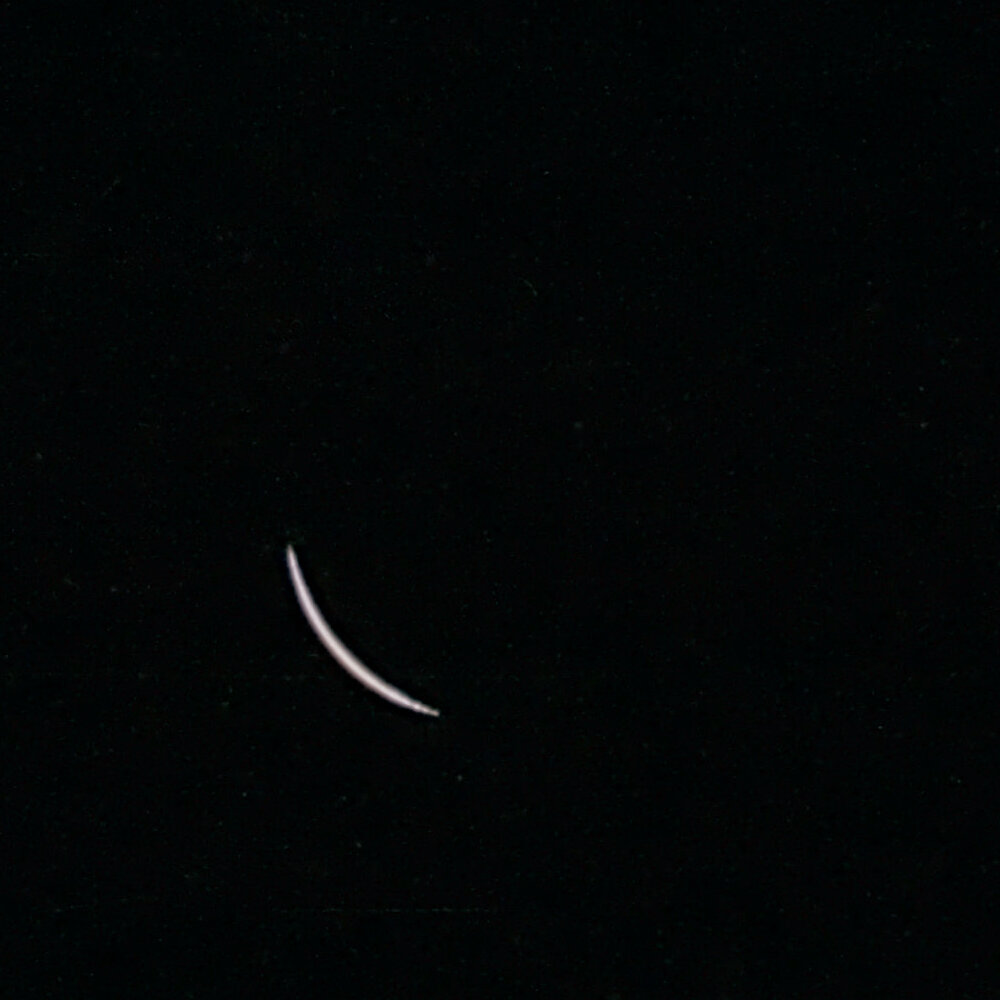
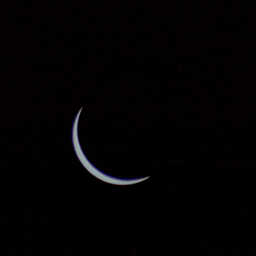
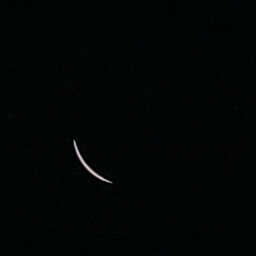
The next two pictures were taken with the filter removed, at 1/4000"
and F11 effective aperture:
Totality
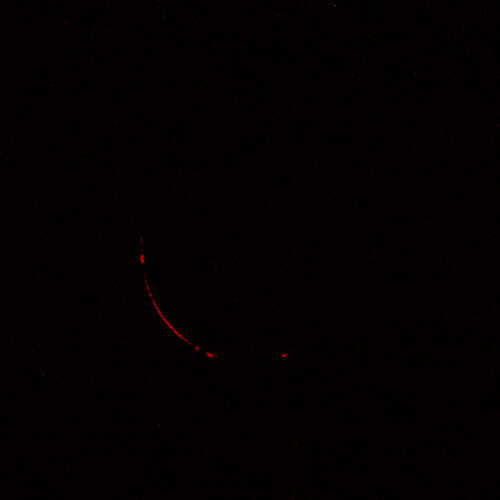
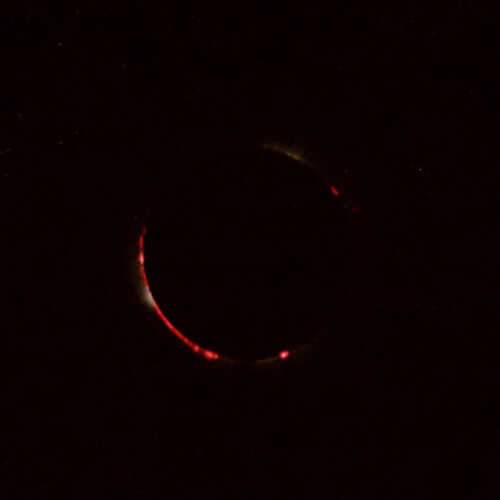
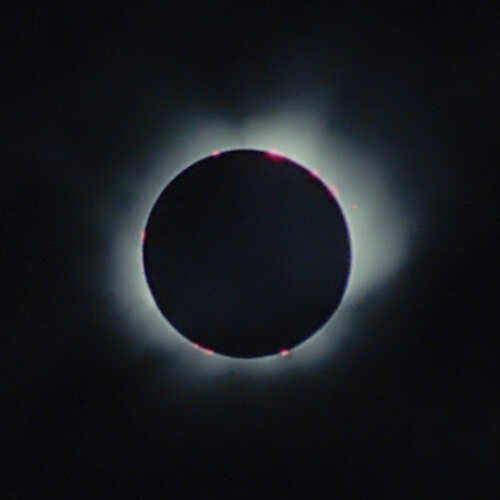
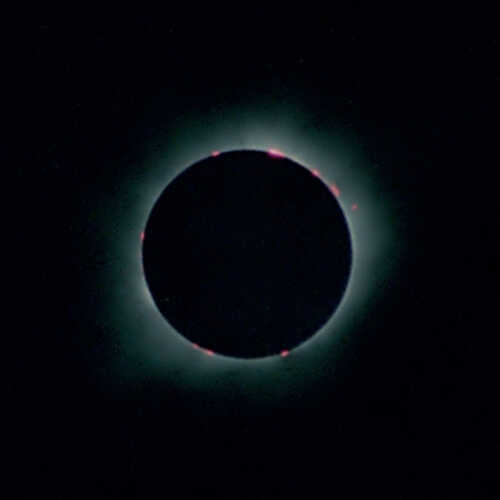
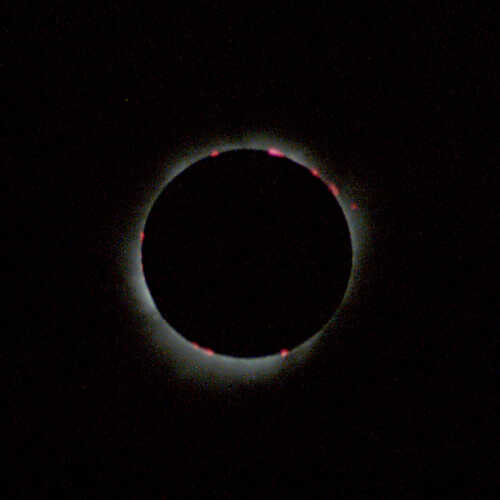
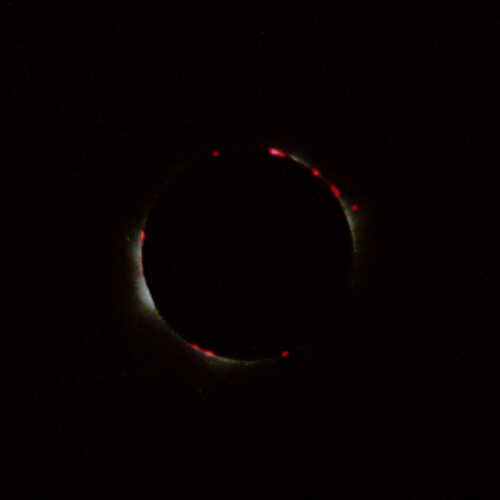
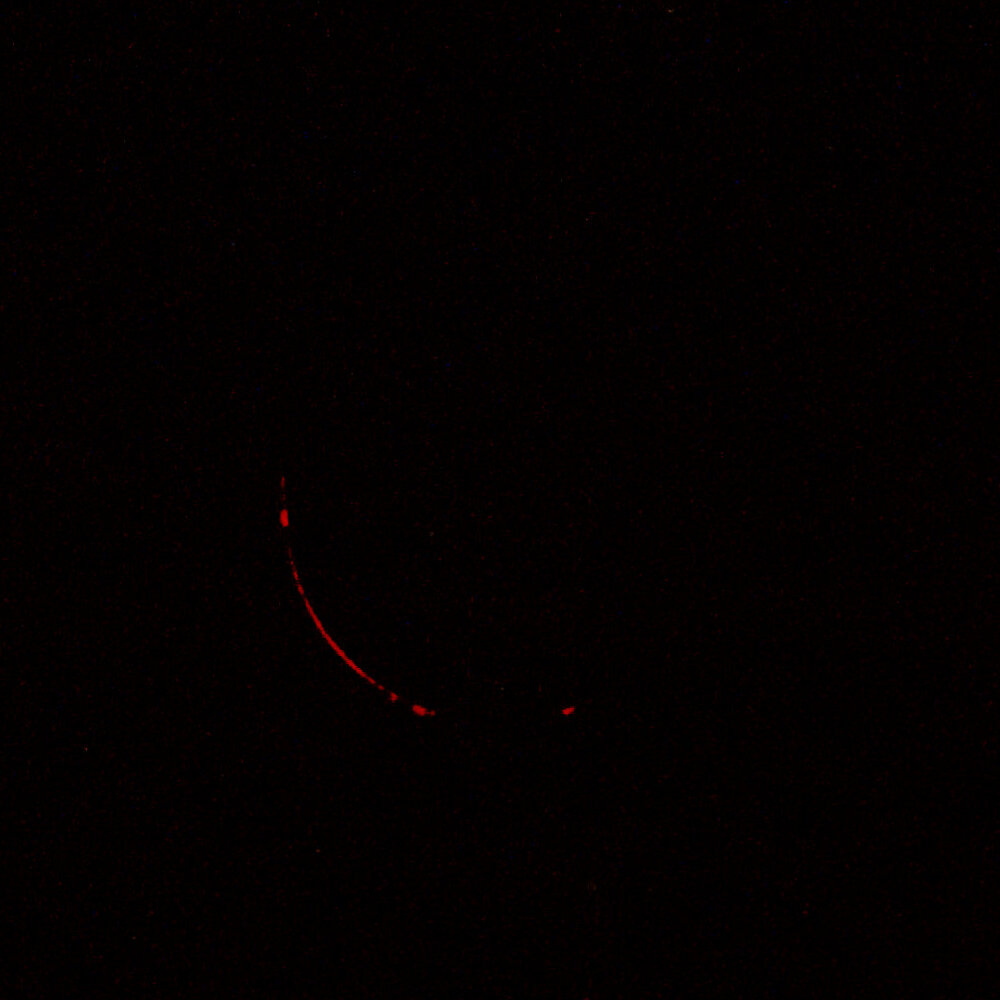
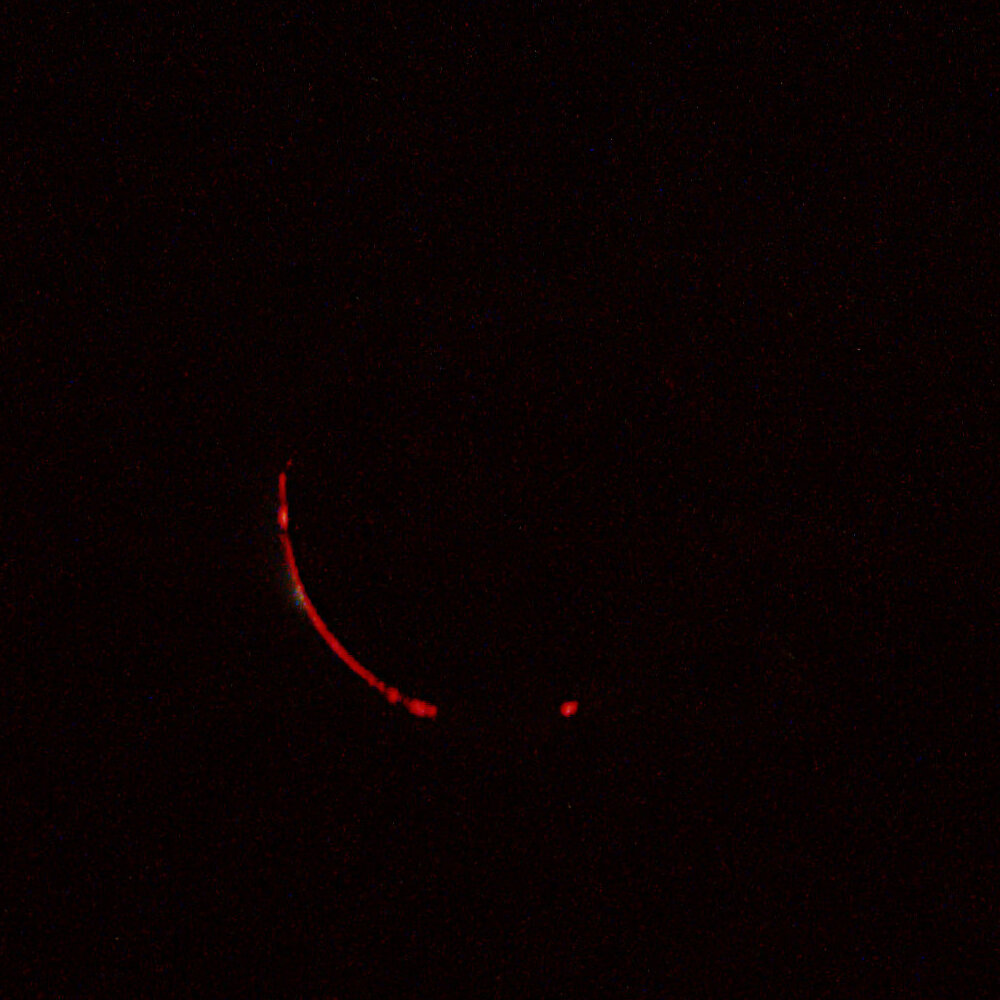
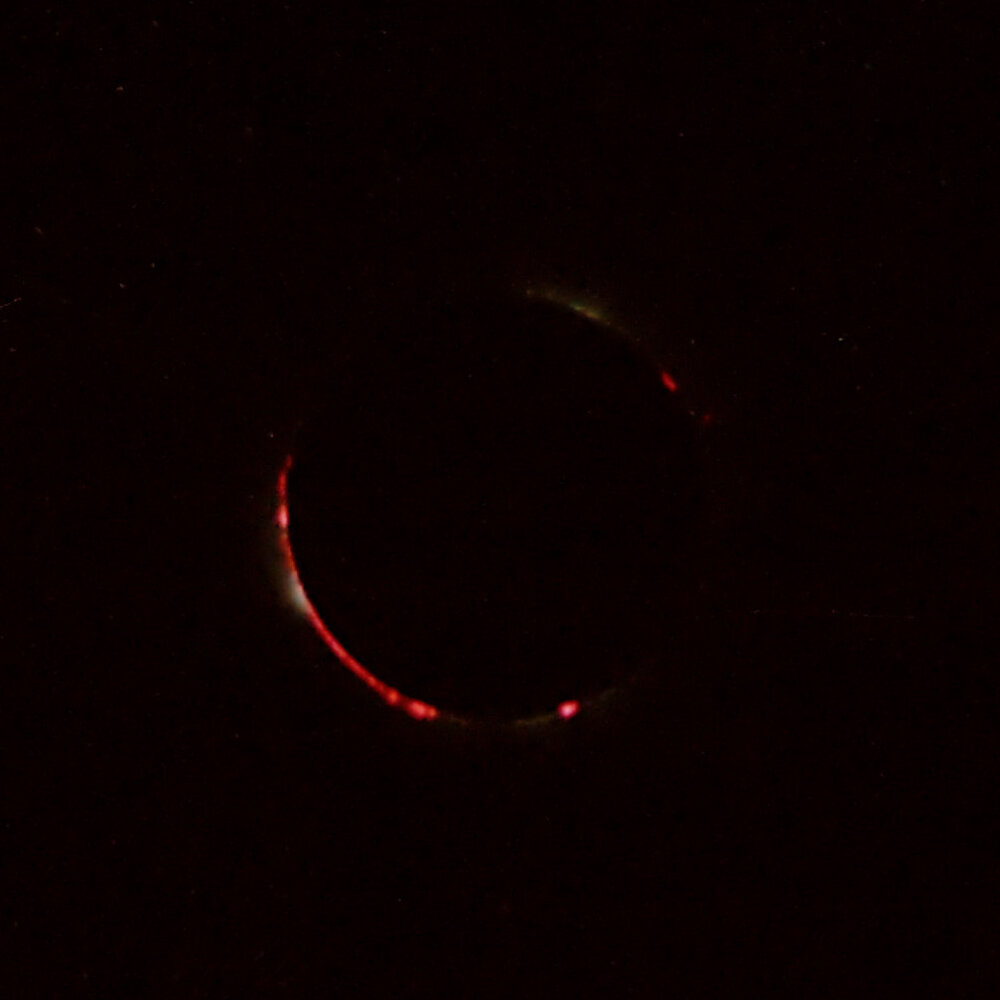
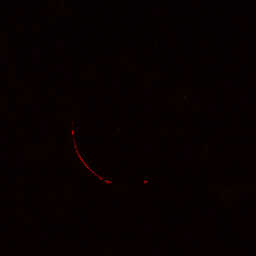
These first two are a bit dim - shutter speeds of 1/30" and 1/15" at F11 were a bit fast:

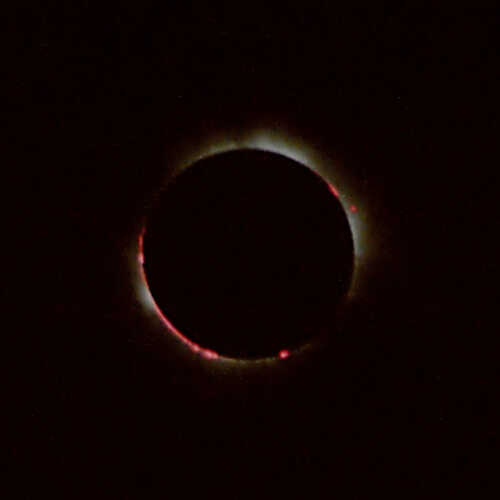
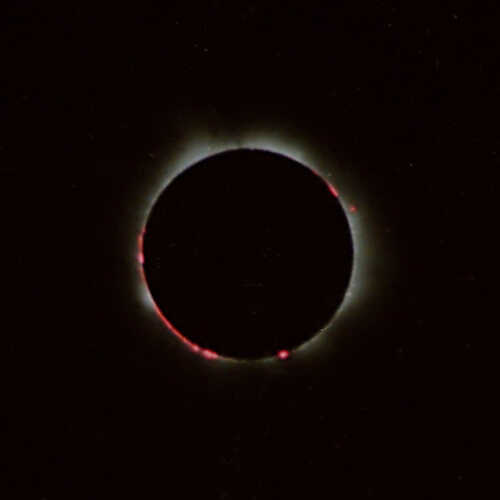
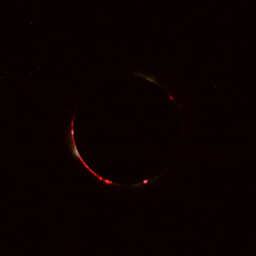
Now the detail becomes gradually more visible as the exposure time increases
to 1/8", 1/4", 1/2" and 1":

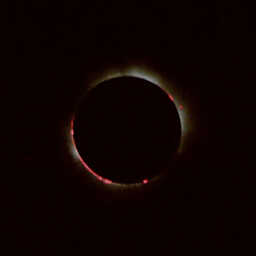
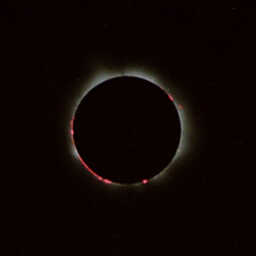
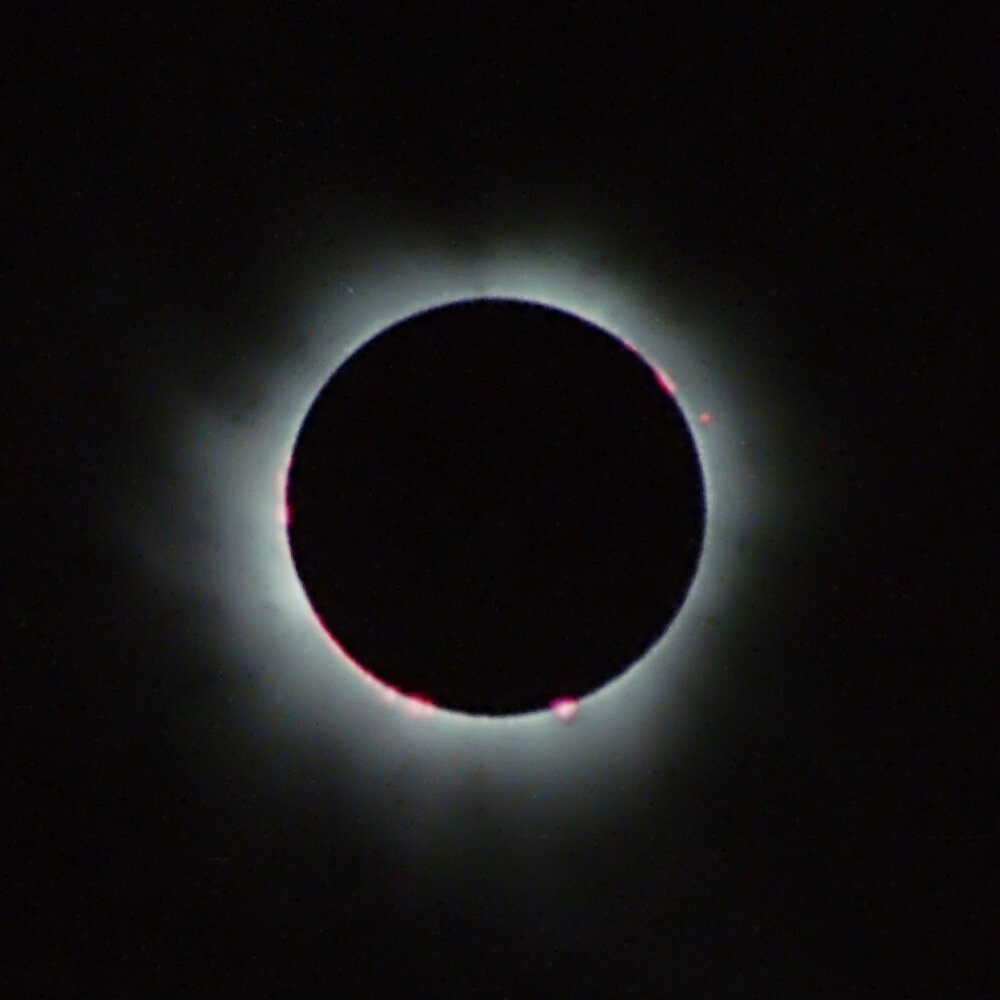
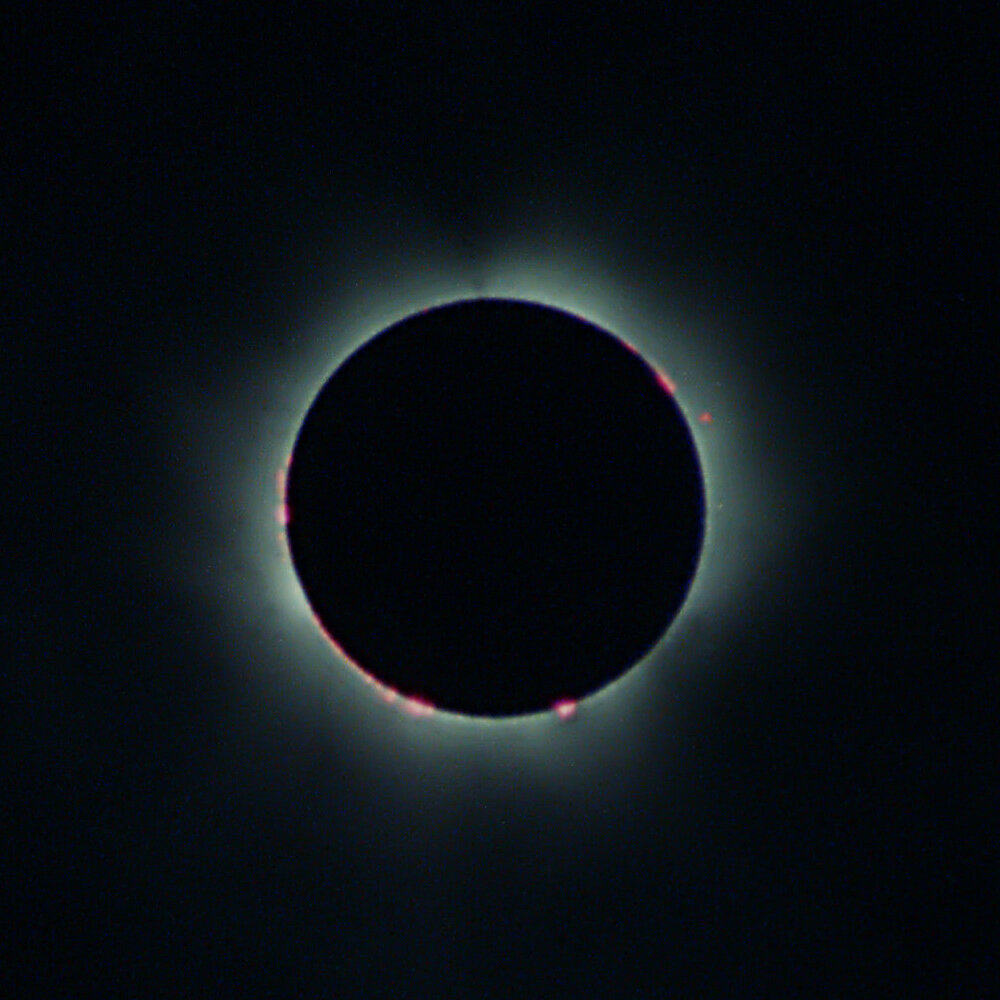
These next ones show the corona quite well, but also a bit of that thin cloud
becomes visible at the longest exposures of 2", 4", 2", 2" 4" and 2" again:
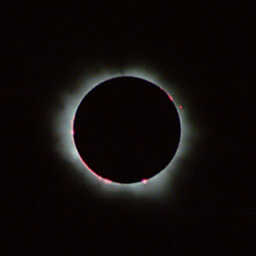
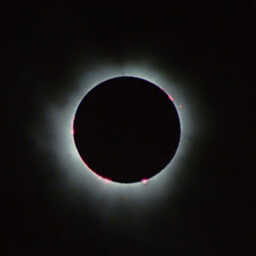
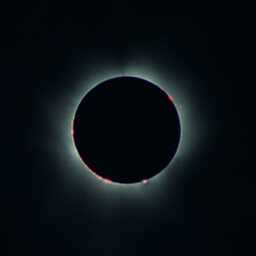

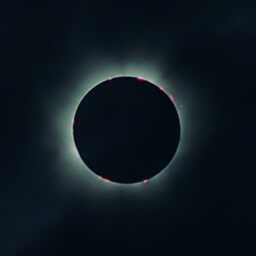

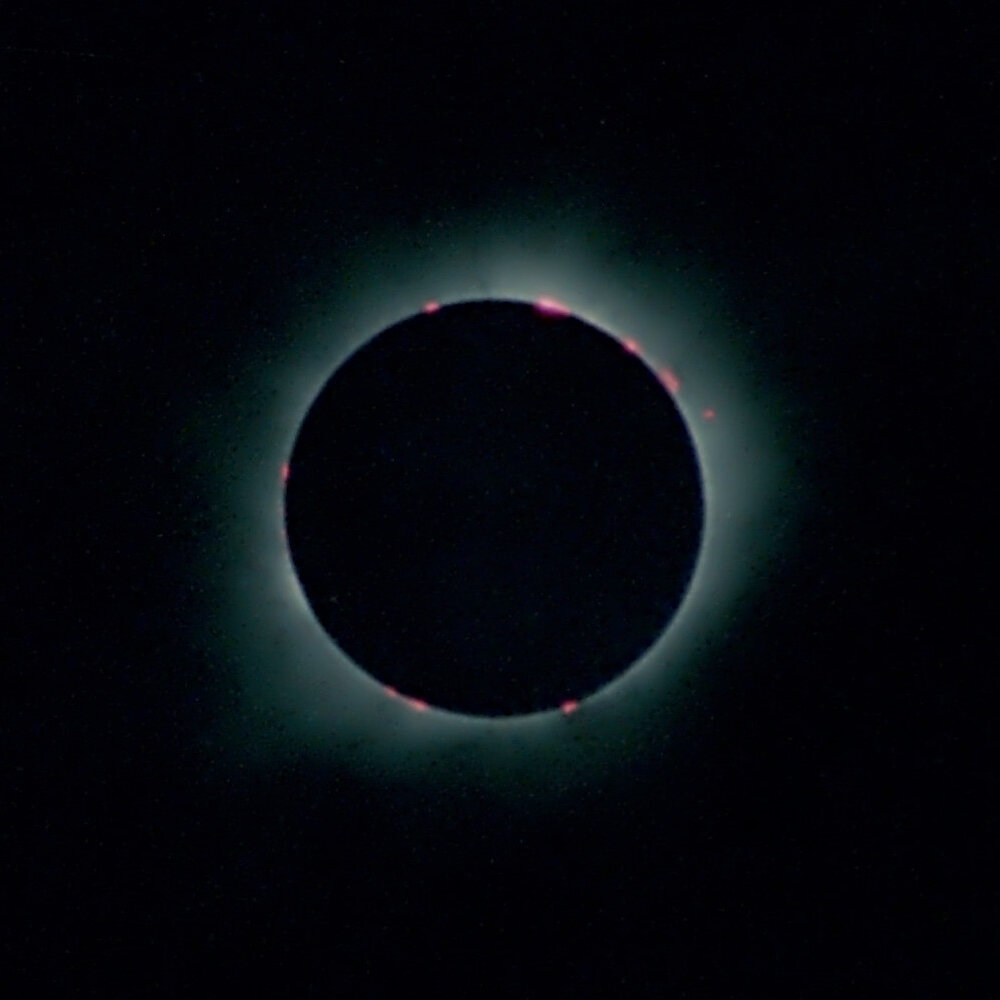
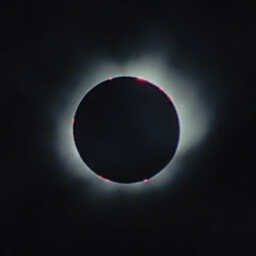
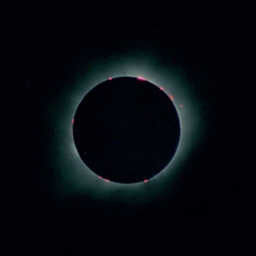
Now the shutter speed sweeps back down to shorter exposures of 1", 1/2", 1/4" and 1/8".
This reduces the corona, but improves the views of the prominences:

A Wider View
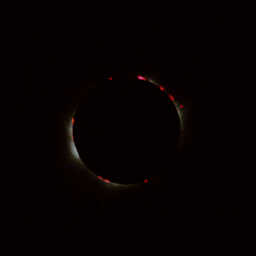
Just in case of disaster with the fancy camera, I had also set up a
totally manual Russian Zorki (non-SLR) camera on the same tripod.
This had a 50mm lens, so gave a much wider field of view. Exposure
was pretty random and only a couple of the shots are worth publishing.
The first image here was taken during totality, the thumbnail is a bit
dim but the main image really does show the eclipse:

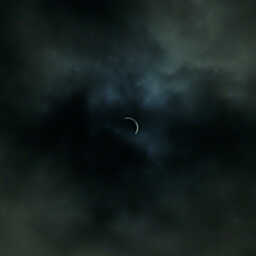
This second image was taken after totality and shows that the clouds
were thickening up quite rapidly:
And Finally
This was my first Total Solar Eclipse, so I am delighted to have got any
pictures at all, let alone so many reasonable (IMHO) ones. No photographs
can really capture the whole majesty of Totality. You really have to
be there to appreciate it.
I now understand why people get "hooked" on eclipses!
If you want to explore the boundaries of science and art, then you are
welcome to play with the images and incorporate them into your own
creations. As an example, have a look at my own attempt at
"The Art of the Total Solar Eclipse".
|